
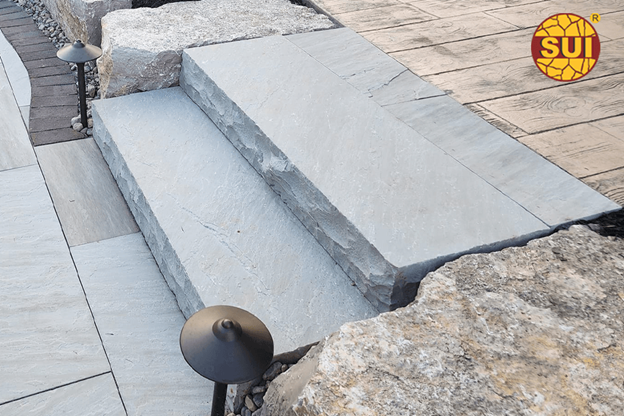
When you’re picking out natural stone for a home or a commercial project, you aren’t just buying a surface. You’re making a permanent investment in the character of a space. Unlike a rug you can swap out or a wall you can easily repaint, natural stone is there for the long term.
Its strength, how the finish holds up over time, and its overall aesthetics all come down to how the stone was sourced, handled, and transported. This is where the natural stone distributor comes in. Most people spend weeks looking at colors and patterns, but only minutes looking at the company selling it. Finding a reliable distributor is the most important task when you are buying the stone.
This blog will walk you through how to find a partner who balances top-tier quality with fair pricing, ensuring your project stays on track and within budget.
Why the Distributor Matters More Than the Stone Itself
It might sound strange, but the source often matters more than the specific slab you fall in love with. Why? Because natural stone is a “live” material. It’s heavy, it’s porous, and it can be fragile if mishandled.
The distributor is responsible for the entire “middle” part of the stone’s journey. They oversee the cutting, the storage conditions, and the final transport. If a distributor cuts corners by storing stone in poor conditions or using subpar cutting machinery, you end up with micro-cracks, uneven edges, or color variations that only show up once the stone is laid out on your floor.
A great natural stone distributor doesn’t just sell stone; they protect it. They ensure that what you saw in the showroom is exactly what arrives at your job site.
Tips to Choose the Right Natural Stone Distributor for Quality and Pricing
You should always consider the following points to choose the right natural stonedistributor:
1. Quality Standards: What to Look For Before You Buy
Quality should always be your first filter. If the stone is poor, a low price won’t save you; it will only cost you more in repairs and replacements later. When evaluating a distributor’s stock, look for these three pillars of quality:
Structural Integrity
Ask about their inspection process. Do they check for “fissures” (natural cracks) that could become “fractures” (breaks) during installation? A reliable source will be transparent about how they grade their stone and what they do to weed out damaged pieces before they reach the customer.
The Sample Test
Never buy stone based solely on a digital photo. Lighting and camera settings can drastically change how a stone looks. A trusted natural stone distributor will encourage you to take a physical sample home. This allows you to see how the color looks in your specific lighting and how it feels to the touch.
2. Navigating the “Pricing Puzzle”
In the stone industry, if a price looks too good to be true, it usually is. However, that doesn’t mean you should overpay. The goal is to find value, not just the lowest number.
Beware of Hidden Costs
Low-cost suppliers often make up the difference by cutting corners on things that matter. They might use cheaper, flimsy crates that lead to breakage during shipping, or they might exclude “finishing” costs from their initial quote.
| What to Ask About Pricing | Why It Matters |
| Crating Fees | Proper wood crates prevent expensive breakage. |
| Freight & Delivery | Stone is heavy; shipping can be a major part of the total cost. |
| Waste Percentage | A distributor with better quality control means you need to buy less “buffer” stone. |
A professional distributor provides a clear, itemized breakdown. They won’t hide the ball or surprise you with “handling fees” the moment you pull out your credit card.
3. Range and Availability: Can They Deliver the Volume?
Before you fall in love with a specific granite or limestone, ask about their current inventory. If you’re working on a large project, you need to ensure the stone comes from the same “lot” or “quarry block.” Natural stone varies from one part of the mountain to the next. If your distributor runs out of stock halfway through your project and has to order more from a different batch, the colors might not match.
A distributor with a wide range and deep stock levels gives you peace of mind that your project won’t be stalled by a “backorder” email.
4. The Logistics of Heavy Lifting: Delivery and Handling
Transporting natural stone is an art form. It requires heavy-duty equipment, specialized crates, and a team that knows how to load and unload without chipping edges.
When vetting a distributor, ask about their shipping protocols:
- Crating: Do they use reinforced wooden crates with internal padding?
- Loading: Do they use specialized forklifts and cranes to minimize manual handling?
- Timelines: Are they realistic about delivery dates? In the construction world, a two-week delay can throw off the entire schedule for plumbers, electricians, and painters.
A natural stone distributor who treats delivery as a core part of their quality control is a distributor you can trust.
5. Reputation and the “Human Factor”
At the end of the day, you are doing business with people. You want a distributor who is responsive, knowledgeable, and honest.
Check the Track Record
Look for reviews from past clients, specifically focusing on how the company handled problems. Every company will eventually have a shipping delay or a broken tile; the mark of a great distributor is how they fix those issues. Do they replace damaged goods quickly? Are they easy to reach on the phone?
Communication Style
If a distributor avoids your technical questions or takes three days to return a text, consider it a red flag. Clear communication is essential, especially when you’re dealing with technical specifications like slip resistance, porosity, and sealing requirements.
6. Balancing the Scales: Quality vs. Pricing
The “sweet spot” in natural stone sourcing is finding a company that values long-term trust over a quick sale. The cheapest stone often ends up being the most expensive after you factor in the cost of broken tiles, poor calibration, and the need for frequent resealing. Conversely, the most expensive stone isn’t always “better”; sometimes you’re just paying for a brand name.
Look for a natural stone distributor that offers fair, market-competitive pricing backed by documented quality checks and a solid reputation.
Conclusion
Choosing the right natural stone distributorrequires a bit of detective work, but it pays off the moment your project is finished. By focusing on quality standards, transparent pricing, and robust logistics, you remove the risk from the equation.
When you ask the right questions, like about sourcing, crating, and batch consistency, you ensure that your garden, patio, or kitchen doesn’t just look good today, but stays beautiful for decades. Brands like Stone Universe Inc. (SUI) have built their reputation on this exact balance, focusing on transparency and consistent supply so that homeowners and contractors don’t have to choose between a fair price and a high-quality product.
Ultimately, your garden or home deserves a foundation built on quality. Choose a partner who values your investment as much as you do.